Planning · · Peak Oxygen, Copper Mountain
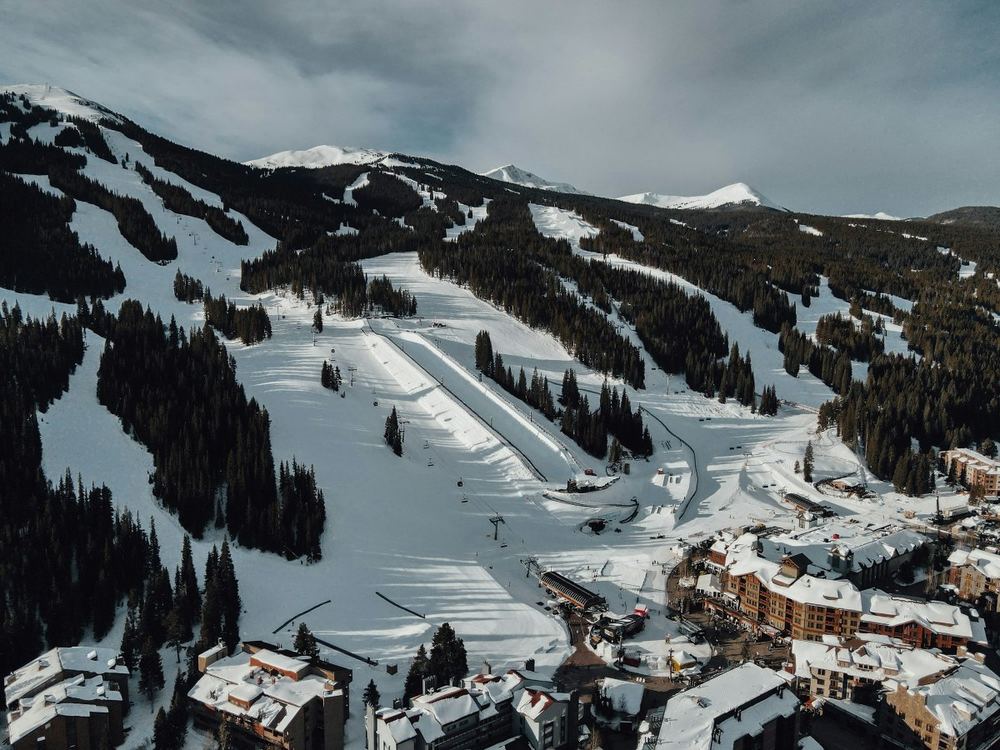
Copper Mountain has a geographic gift: it sits directly on Interstate 70 at exit 195, roughly 75 miles west of Denver, with no mountain pass to drive and no winding access road at the end. That makes it one of the simplest ski trips to plan from the Front Range or Denver International Airport. Simple is not the same as effortless, though. Winter weekends on I-70 are famously busy, Colorado has a traction law that applies to every car, and the parking picture at Copper has changed over the years. Here is what to know.
The drive
From downtown Denver, take I-70 west and stay on it. From the airport, follow Peña Boulevard to I-70 west. The road climbs past Idaho Springs and Georgetown, through the Eisenhower-Johnson Memorial Tunnel under the Continental Divide at about 11,100 feet, drops into Summit County past Silverthorne and Frisco, and reaches exit 195 for Copper Mountain. In clear conditions with light traffic the drive takes around an hour and a half to two hours from Denver, and a little longer from the airport. In a storm or on a holiday weekend, plan for far more.
Colorado's traction law
From September 1 through May 31 the Colorado Department of Transportation keeps a passenger-vehicle traction law in effect on the I-70 mountain corridor between Morrison and Dotsero. The rules were tightened in late 2025: every car, including all-wheel and four-wheel drive, must have tires with at least 3/16 inch of tread that are winter or all-weather rated, shown by the mountain-snowflake symbol or an M+S marking, or must carry chains or an approved alternative traction device. In severe storms CDOT can go a step further and require chains or a traction device on every vehicle as the last step before closing the highway. Fines apply, and they rise if a stuck car closes a lane.
If you are renting at the airport, ask for a vehicle that meets the standard and check the tires before you leave the lot. CDOT recommends all-wheel or four-wheel drive in the mountains, but good tires matter more than the badge on the tailgate.
When to leave
I-70 traffic follows a predictable rhythm. Westbound backs up from Floyd Hill on Saturday mornings, roughly six to eight, and on Friday evenings. Eastbound slows from the tunnel on Saturday afternoons and for most of Sunday from late morning until evening. CDOT often meters traffic at the tunnel during those peaks, and warns that travel times can double. The easy fix is to go against the grain: leave Denver before dawn or after mid-morning, and head home early, late or on a weekday. Floyd Hill has also been under construction with overnight closures, so check for current impacts before a late-night drive.
Before any winter trip, look at COtrip.org or the COtrip Planner app for road conditions, closures and chain-law status, or call 511. The GoI70 site posts weekend travel forecasts for the corridor.
Taking the bus instead
You do not have to drive. CDOT's Snowstang ski bus has run to Copper on weekends and holiday Mondays in recent winters, leaving Denver Union Station and the Federal Center in Lakewood early in the morning, arriving at Copper's Beeler lot by mid-morning and returning at four. Tickets must be bought in advance online. The 2026-27 schedule had not been posted when this was written, so check ridebustang.com.
Year-round, the Bustang West Line and the Pegasus vans run from Union Station and the Federal Center to the Frisco Transit Center. From Frisco the free Summit Stage bus covers the eight miles to Copper on a route that runs every half hour in winter. For airport arrivals, Summit Express is Copper's official shuttle partner with shared and private rides from DIA, and several other mountain carriers pick up on the fifth level of the terminal. Reserve ahead.
Parking at Copper
The Alpine and Far East lots are free every day during winter operating hours, with free shuttles to the villages running from early morning until ten at night. The close-in lots at Ten Mile, Chapel, Union Creek, Beeler and Wheeler are paid during the day, with payment by QR code in the lot and license plates checked; they become free after two in the afternoon. Overnight parking is limited to the Alpine lot. Rules and lot names change season to season, so glance at the resort's parking page before you go.
Arriving well
- Fill up early. Services thin out past Georgetown; top off before the climb.
- Carry water and snacks. A tunnel closure can hold traffic for an hour or more.
- Pack layers in the car, not the trunk, in case you are standing outside in a storm.
- Give yourself a slow first evening. Copper's village sits near 9,700 feet, and the climb from Denver is more than 4,000 feet in under two hours.
A note on altitude
Arriving at nearly 10,000 feet straight from the airport is a big jump, and many visitors feel it that first night: a headache, restless sleep, a shorter fuse. Drink plenty of water on the drive, keep the first evening light and give yourself an easy first morning. If anyone in your group struggles with sleep or headaches at altitude, Peak Oxygen delivers in-home and portable oxygen concentrators to lodging at Copper Mountain and across Summit County, set up before you arrive; call (970) 368-9190 with questions. Talk to a doctor about any medical questions before your trip.
Once you are off the interstate and onto Copper's shuttle, the hard part is over. Everything at the resort is a short ride apart, and the drive you just made is the last one you need until you head home.